

Finally, an approach that addresses the cause, not just the symptoms.

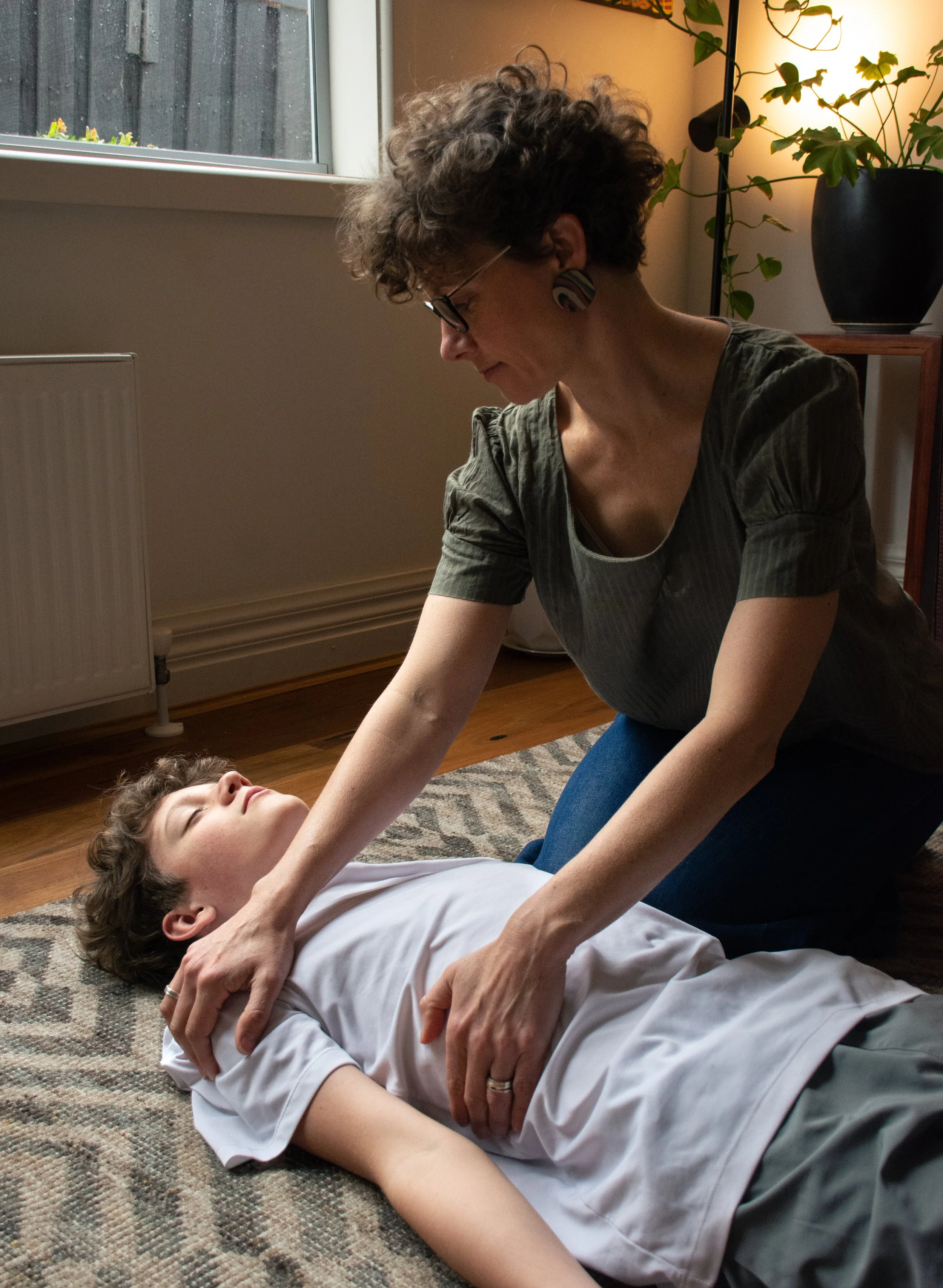
The Institute of Neuro-Physiological Psychologists [INPP] was established in 1975 by psychologist and neurodevelopmental specialist Dr Peter Blythe. Its success is predicated on a thorough understanding of the developmental needs of the individual and a tailor-made program to address the earliest developmental marker of immaturity.
The INPP™ program is a movement (physical exercise) program founded upon more than 45 years of research, expertise, and clinical practice in neurodevelopmental psychology. It identifies, assesses, and corrects physical factors contributing to neuromotor immaturity (NMI). “Individuals with neuromotor immaturity (NMI) frequently experience difficulties with related skills such as balance, coordination, and visual perception, which can affect behaviour and educational performance in children, and manifest as chronic anxiety and emotional sensibility in adults” (Goddard Blythe, 2017, p. 3).
The INPP™ program is noninvasive and drug-free and requires only 5-10 minutes of daily practice.
Sally Goddard Blythe is the director of the INPP and author of eight books on motor development.
The INPP™ program
Steps to Success
Step 1: Initial Inquiry
Email or call us to learn more about the INPP™ approach (no charge).

Step 2: Initial Screening
Complete a screening questionnaire: seven or more ‘yes’ responses affirm that the INPP™ program could benefit you or your child.
Step 3: Developmental History
A one-and-a-half-hour discussion of the key stages of neurodevelopment including genetic, epigenetic, and nutritional factors.
Step 4: INPP™ Diagnostic Assessment
A 2-hour physical and cognitive assessment to establish the neuromotor and sensory profile (parents/carers are required for child assessments).
Step 5: Education Report & Program
A one-and-a-half-hour discussion of the INPP™ Educational Report incorporating the findings of the developmental history consultation and INPP™ Diagnostic Assessment.
The initial program exercise(s) are demonstrated, and instructional support notes are provided.
Step 6*: Program review and revision
Daily exercise(s) are undertaken at home for 5-10 minutes daily. A video check-in within the first two weeks is available to ensure adherence and to address any concerns.
Two-hour review sessions are undertaken every 6-8 weeks, including a full or, in some instances, partial INPP™ Diagnostic Assessment and an amended exercise program to address the maturing neuromotor and sensory profile.
* Step six is repeated for up to 12 months
Fee structure for 2026
-
Step 3: Developmental History Consultation $180
Step 4: Initial diagnostic Assessment $240
Step 5: Education Report and Program Development $495
-
Step 6: Follow‑up diagnostic assessments with revised exercises as needed. A standard review session is 1.5 hours for adults, or 60–75 minutes for younger clients.
FAQs
Is the INPP™ program covered by the NDIS?
Yes! The INPP™ program applies to self-managed NDIS participants via Capacity Building: Improved Daily Living.
Registration group 0128: Therapeutic Supports, Assessment Recommendation Therapy, or Training Supports—Other Professionals, for participants older than 7.
Who is the INPP™?
The INPP™ [Institute of Neuro-Physiological Psychologists] was established in 1975 and has assisted thousands of individuals worldwide to achieve improved functionality cognitively, physically, and emotionally.
Sally Goddard Blythe is the director of the INPP and author of eight books on motor development for both general readership and professional education.
What is the INPP™ Diagnostic Assessment?
The INPP™ diagnostic assessment provides insight into the inner workings of the central nervous system, providing evidence of the level and type of remedial intervention that would be suitable. The diagnostic includes an assessment of:
gross motor functionality
patterns of motor development
cerebellar functionality
presence of dysdiadochokinesia
left-right discrimination, laterality, orientation and spatial awareness
aberrant reflexes
oculomotor function, and visual perception.
What are primitive and postural reflexes?
Reflexes are stereotypical and consistent responses to stimuli.
Primitive reflexes are developed in utero, present at birth (in a full-term neonate), and inhibited by higher centres of the developing brain in the first 6 months postnatal. The primitive reflexes assessed in the INPP™ diagnostic assessment include Moro, TLR (tonic labyrinthine reflex), ATNR (asymmetrical tonic neck reflex), STNR (symmetrical tonic neck reflex), spinal galant, Palmar grasp reflex, Plantar flexor reflex, Babinski grasp reflex, rooting, and sucking reflexes.
Postural reflexes emerge postnatally and take up to three to three and a half years to fully develop. The postural reflexes assessed in the INPP™ diagnostic assessment include the LHRR and OHRR (labyrinthine and ocular head right reflexes), VOR (vestibular ocular reflex), Landau, amphibian righting reflex, and SRR (segmental rolling reflexes).